Tenerife is one of the very best places on the planet to see whales and dolphins in the wild, and most visitors never realise it. Barely twenty minutes off the south-west coast there are pilot whales and bottlenose dolphins living here all year round. We are Ronaldo and Mane, local hosts born and raised in the Canary Islands, and this is our honest guide: what you will see, when to go, how to choose a boat that treats the animals properly, and what it costs.
Why Tenerife is one of the world's best spots
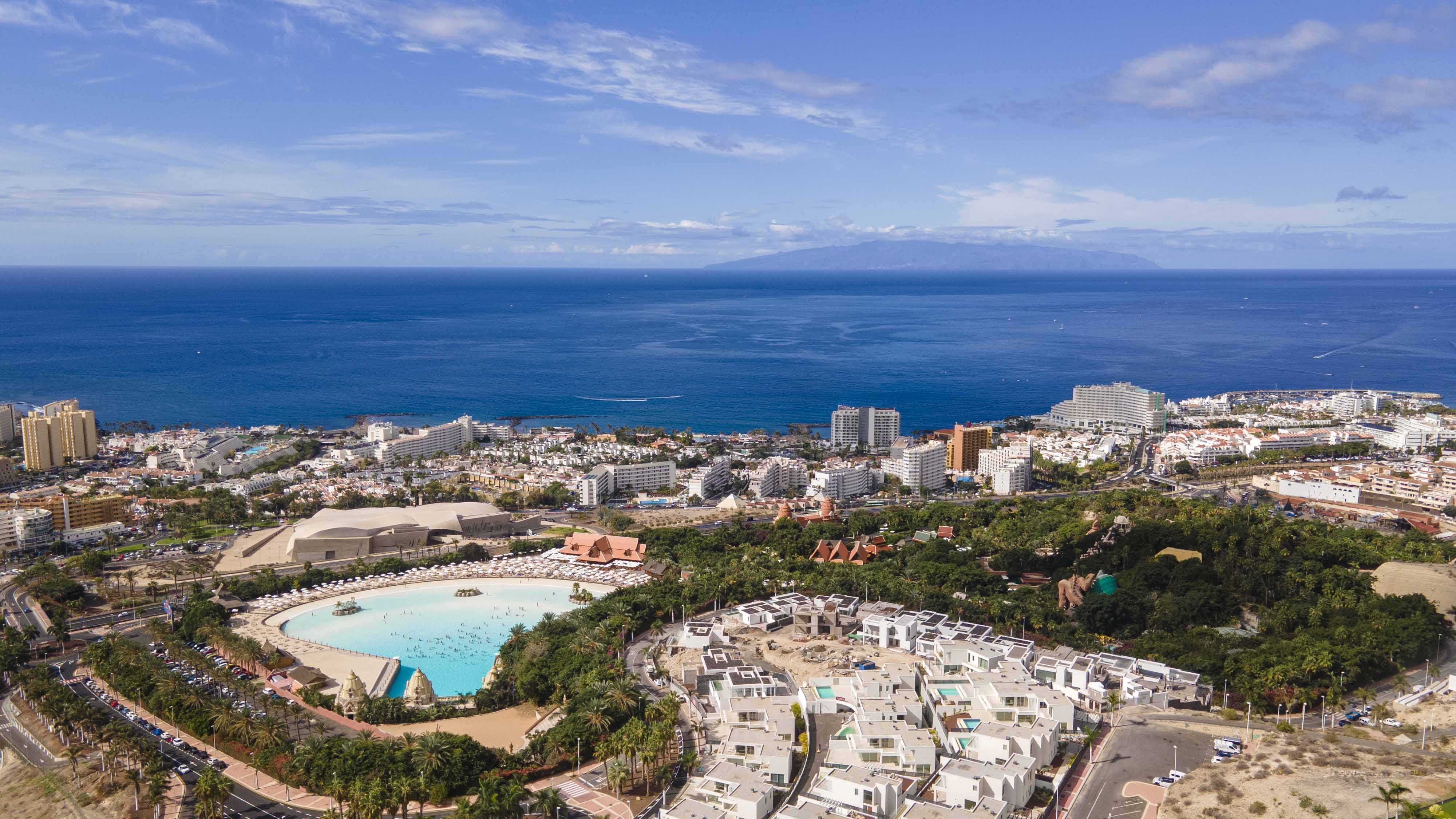
The stretch of sea between Tenerife's south-west coast and the island of La Gomera, known as the Teno-Rasca marine strip, is unusually deep very close to shore and sheltered from the strongest winds. That combination means a colony of short-finned pilot whales and a population of bottlenose dolphins live here permanently rather than passing through on migration.
In other words, you are not hoping to get lucky with a seasonal migration. These animals are residents. It is why this stretch of water was recognised as a Whale Heritage Site, the first in Europe, a designation reserved for places that combine outstanding cetacean populations with responsible, respectful watching.
And because the deep water sits so close to land, boats reach the animals in roughly twenty to thirty minutes. You are not stuck at sea for hours before anything happens.
What you will actually see
- Short-finned pilot whales (calderon tropical) — resident all year, dark with rounded heads, often resting in family groups at the surface.
- Bottlenose dolphins — resident all year, playful and curious, frequently riding the bow wave.
- Occasional visitors — Atlantic spotted dolphins, sperm whales, fin whales and, if you are very lucky, orcas.
- Also common — loggerhead turtles, flying fish and seabirds on the way out.
Sighting rates on this coast are very high, but these are wild animals in the open ocean, not a show. No serious operator can promise you a sighting. What is guaranteed is the sea, the cliffs and a beautiful morning on the water.
The best time to go
The honest answer is any month of the year. Because the pilot whales and dolphins are residents, there is no closed season, and both water temperature and daylight are good all year.
What matters far more than the month is the time of day. Mornings are usually calmer, with less wind and a flatter sea, which makes animals easier to spot and is far kinder to anyone prone to seasickness. If you can choose, book a morning trip.
Where the boats leave from
- Puerto Colon (Costa Adeje) — the widest choice of boats, right in the tourist heart of the south.
- Los Cristianos (Arona) — excellent value trips, including boats with underwater viewing windows.
- Los Gigantes — closest to the towering cliffs, the most dramatic scenery.
All three are an easy drive from our villas in the south. If you want the freedom to pick your port and explore the rest of the island on your own terms, take a look at our car rental in Tenerife.
How to choose a responsible boat
Whale watching here is regulated, and not every boat plays by the rules. The easiest thing to check is the Blue Boat flag (Barco Azul), an official accreditation given to vessels authorised for responsible cetacean watching in the Canary Islands. If a boat carries it, it has committed to the rules.
Those rules exist for good reason: keep a respectful distance, approach slowly and never head-on, limit the time spent with each group, never feed the animals and never swim with them. A boat that chases pods is stressing animals that live there permanently.
We only work with accredited operators. It is better to watch a family group calmly from a proper distance than to be on a boat that harasses them, and honestly the calm approach gives you the better experience anyway.
Our whale and dolphin trips
These are the trips we book for our guests, and we can arrange them before you even land:
- Whale & Dolphin Watching + Underwater Vision — from €25, 2 hours, from Los Cristianos. Our most popular trip and the best value: the boat has underwater viewing windows, which children adore.
- Whale & Dolphin Watching, Opera 60 — from €50, 3 hours, from Puerto Colon. More space, more time at sea and a more comfortable boat.
- Private charter, Opera 33 — from €500 for the boat, 3 to 5 hours. Just your group, at your own pace.
- Private charter, White Heaven — from €650 for the boat, 3 to 6 hours, with food and drinks on the longer trips.
You can see them all on our experiences page.
What to bring
- Sun cream, a hat and sunglasses. The glare off the water is fierce.
- A light windbreaker. It is always cooler at sea than on the beach.
- Water and a snack.
- Seasickness tablets if you are sensitive. Take them thirty to sixty minutes before boarding, not once you already feel unwell.
- A camera or phone with a strap, and flat shoes with grip.
Going with children
It works beautifully, with two conditions: choose a morning departure and keep it short. The two-hour trip with underwater vision is the one we recommend for families, because the windows below deck keep children entertained even between sightings, and two hours matches their attention span.
Make a day of it
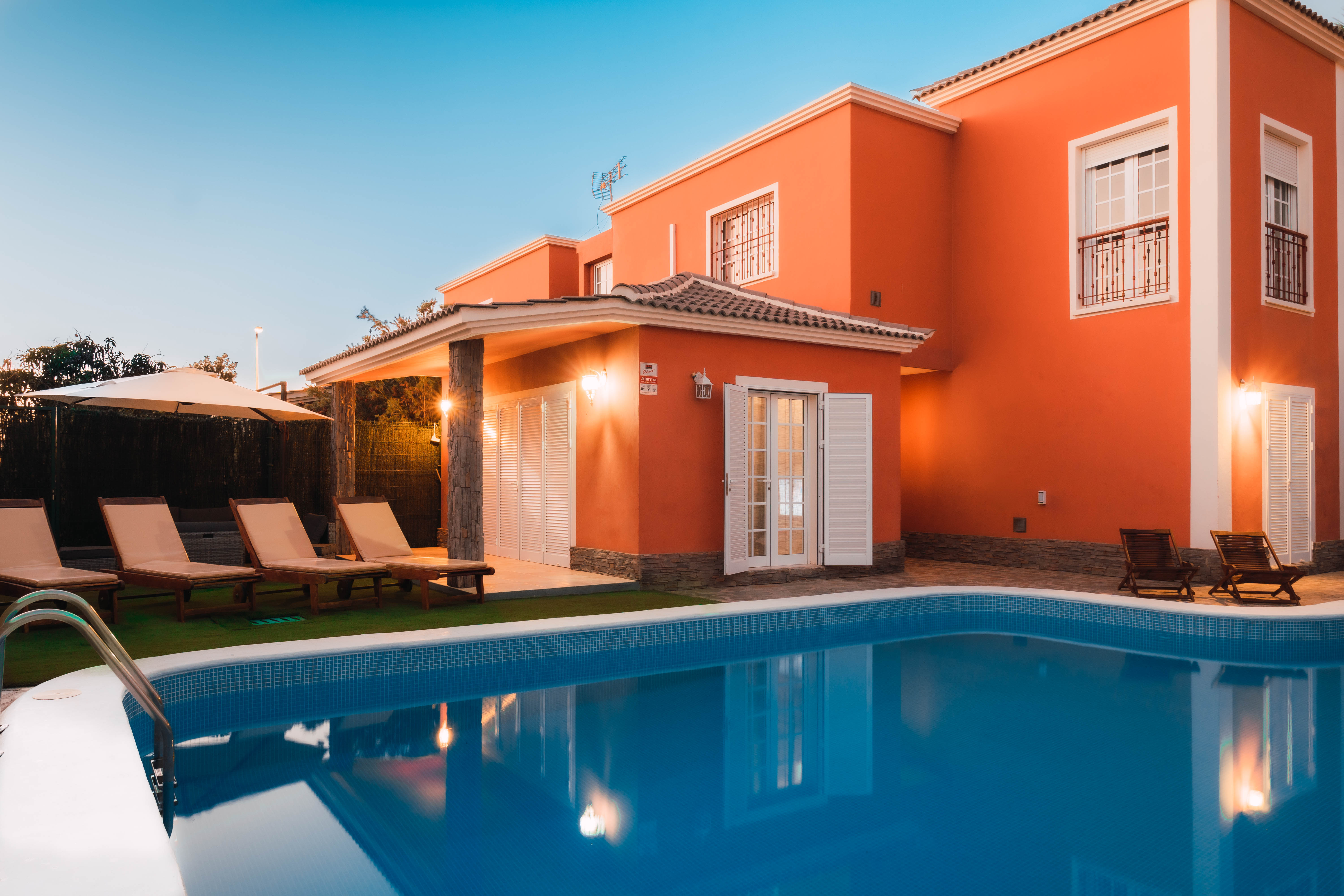
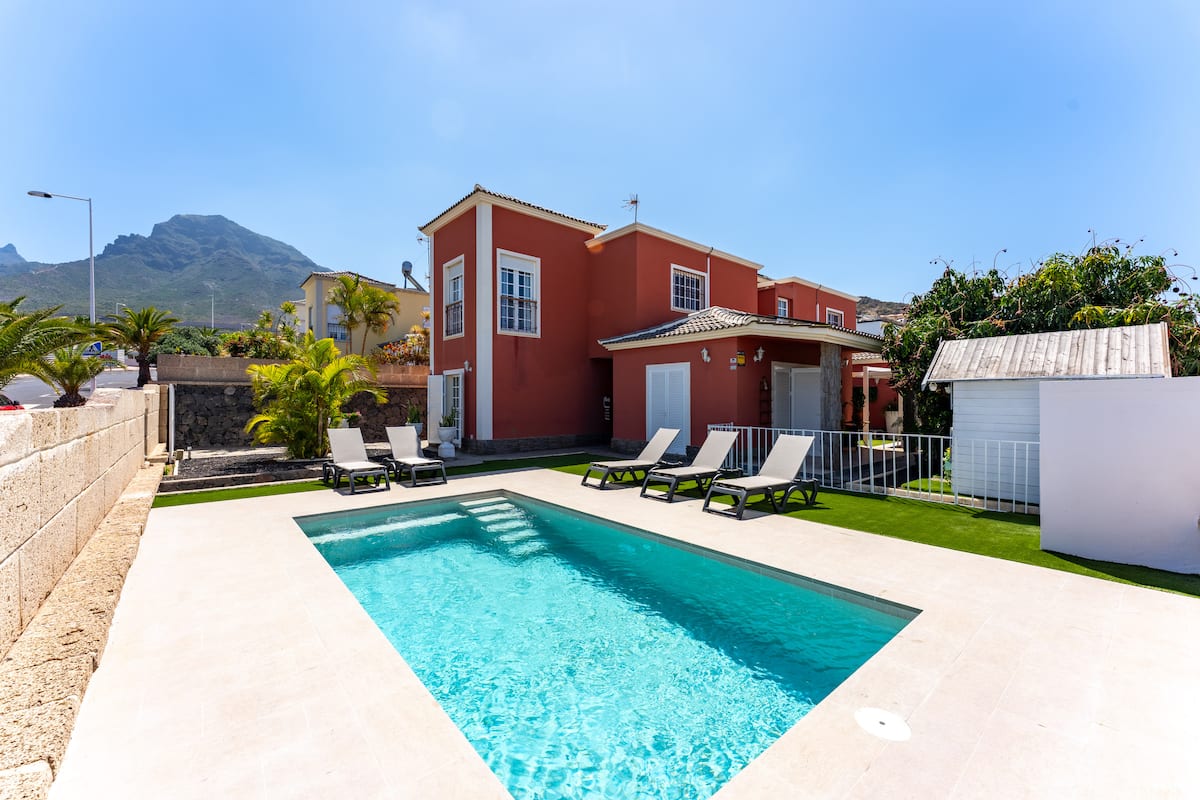
Most trips are back by lunchtime, which leaves the afternoon free. From Los Cristianos or Costa Adeje you are minutes from the best beaches in the south, and the drive up to the Los Gigantes cliffs is spectacular. Staying with us? Our villas in Costa Adeje put you within fifteen minutes of every departure port.
Ready to meet the whales?
We book with accredited local boats only. Reserve your trip with us and we will sort the rest of your stay too.